
Sustainability in Pallet Logistics: How Digital Processes Help
Circular economy for euro pallets, how digital documentation extends lifespan and reduces the carbon footprint.
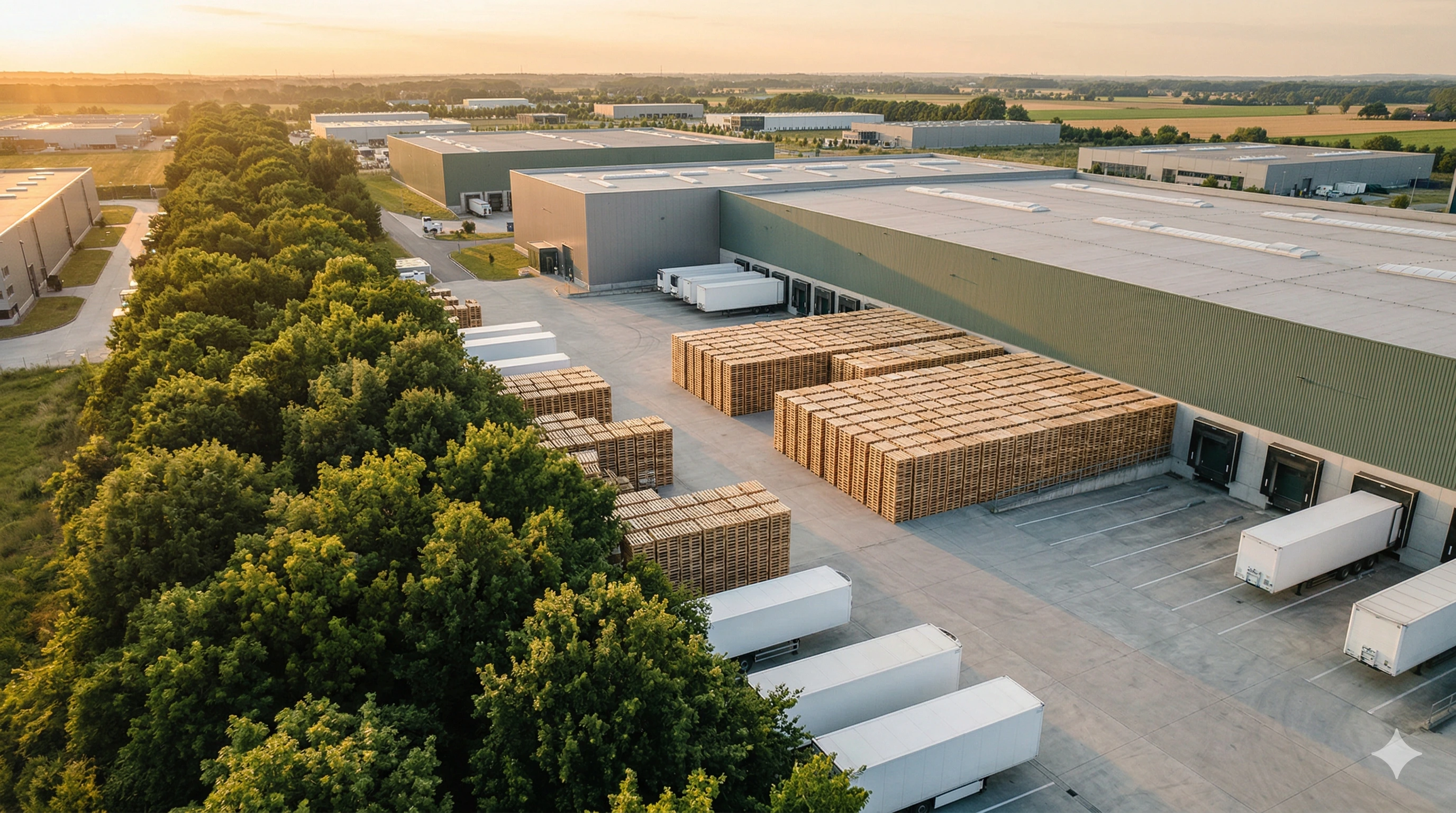
The euro pallet is one of the most successful reusable systems in the logistics industry. For decades it has formed the backbone of European goods transport — robust, standardised and fundamentally designed for a long life cycle. But how sustainable is pallet logistics really? And what contribution can digitalisation make to further reduce the ecological footprint?
The euro pallet as a circular product
The euro pallet was conceived as a reusable product from the very beginning. The exchange system managed by the European Pallet Association (EPAL) ensures that pallets are not discarded after a single use but passed on within a circular system. A well-maintained euro pallet goes through up to 50 rotations and can remain in service for over 10 years.
The principle is as simple as it is effective: standardised dimensions (1200 × 800 mm), uniform quality requirements and an open exchange pool allow pallets to circulate between different companies, industries and countries without the need for a new load carrier management system each time.
In addition, the EPAL repair network ensures that damaged pallets are not immediately retired. Licensed repair companies replace defective boards and blocks, returning pallets to the cycle. The decision whether a pallet should still be repaired or rather exchanged is a critical factor in the overall balance.
Why so many pallets are still discarded too early
Despite the well-designed reuse system, millions of euro pallets are prematurely taken out of circulation every year. The reasons are less technical than organisational:
Lack of documentation: Decisions at the loading dock are made under time pressure. When the condition of a pallet is unclear — is it genuine damage or just normal signs of use? — the default is to sort it out. Without standardised assessment criteria, many a pallet ends up on the waste pile that could have had several more rotations ahead.
Uncertainty about quality classes: Many logistics employees only have a superficial understanding of the differences between quality classes (New, A, B, C). This leads to pallets being either wrongly rejected or accepted with insufficient quality requirements.
Lack of traceability: When nobody knows how often a pallet has already been repaired, what damage it has sustained and when it was last inspected, confidence in its serviceability drops. The consequence: the pallet is discarded even though a targeted repair would have been sufficient.
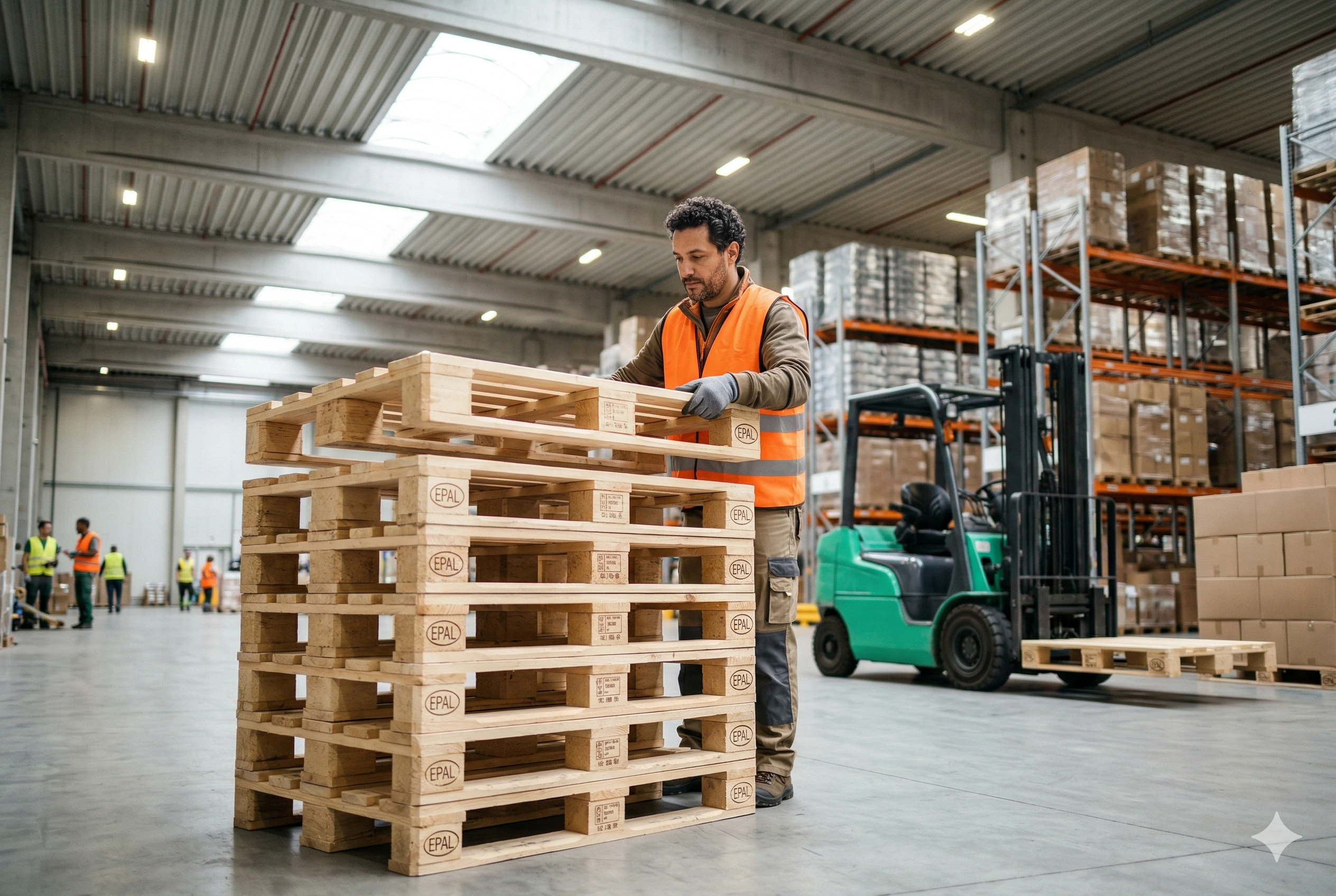
How digital damage documentation extends lifespan
Digitalisation addresses precisely these weak points. Systematic, digital recording of pallet condition fundamentally changes the basis for decisions at the loading dock:
Objective assessment instead of gut feeling: When every piece of damage is photographically documented and classified according to standardised criteria, a reliable data basis emerges. Employees no longer have to decide by feel but can rely on clear guidelines.
Targeted repair instead of premature disposal: Digital damage reports show precisely which component is affected and whether repair is economically viable. Instead of retiring a pallet completely, only the defective board is replaced — and the pallet goes back into the cycle.
Historical data per pallet: Over time, a damage history builds up that shows which pallets are still serviceable and which have genuinely reached the end of their lifespan. This reduces uncertainty and prevents unnecessary disposals.
Companies that digitise their pallet returns report a significant reduction in rejection rates — sometimes by 15 to 25 per cent.
CO₂ impact: what manufacturing a new euro pallet costs
The ecological relevance becomes clear when you look at the production of a new euro pallet:
- A new euro pallet consists of approximately 20 to 24 kg of wood (softwood, predominantly spruce or pine)
- Production, timber transport and manufacturing account for roughly 8 to 12 kg of CO₂ equivalent
- Add to this the energy required for IPPC-compliant heat treatment (ISPM 15), which is mandatory for international trade
- Every avoided new production saves not only CO₂ but also water, land and biodiversity, as less timber needs to be harvested
Scaled to the European market, where an estimated 80 to 100 million new euro pallets are produced annually, the savings potential is enormous. Even if better documentation and repair reduced the need for new pallets by just 10 per cent, this would correspond to savings of around 80,000 to 120,000 tonnes of CO₂ per year.
ESG reporting and sustainability certifications
With the growing importance of ESG criteria (Environmental, Social, Governance), supply chain sustainability is also becoming a compliance issue. Under the Corporate Sustainability Reporting Directive (CSRD), companies increasingly need to demonstrate what measures they are taking to reduce their ecological footprint.
Digital pallet documentation provides reliable data here:
- Rotation counts: How often are pallets reused before being retired?
- Repair rates: How many pallets are repaired rather than disposed of?
- Rejection causes: Which types of damage most frequently lead to disposal — and can these be systematically reduced?
- CO₂ savings: How many new productions were avoided through repair and extended service life?
These metrics feed directly into sustainability reports and support certifications such as ISO 14001 or industry-specific standards. At the same time, they help reduce pallet logistics costs, because sustainability and cost-effectiveness are not contradictions in this case.
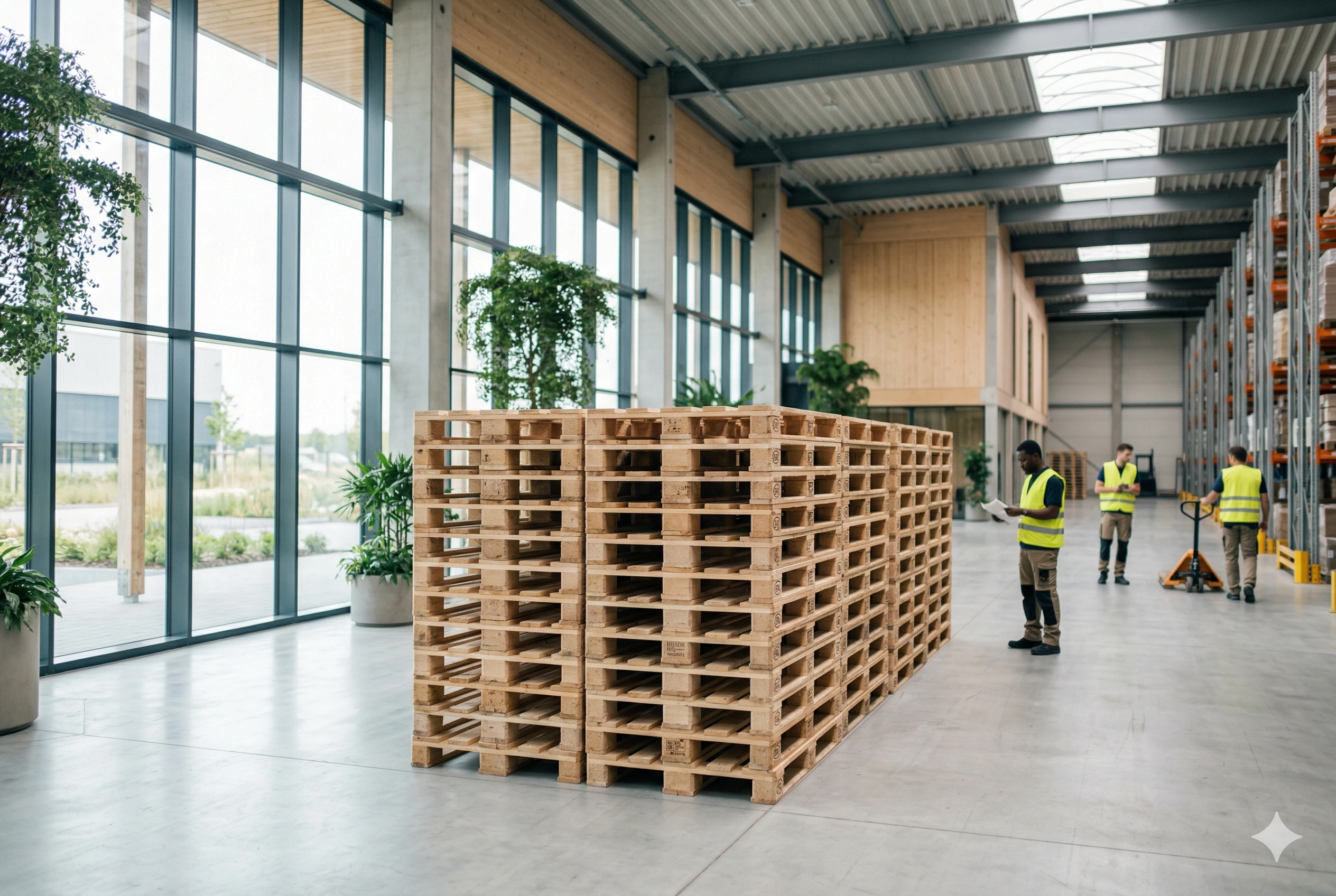
Conclusion: digitalisation as a sustainability lever
The euro pallet is inherently a sustainable product — but only if the reuse system actually works. Too many pallets are discarded prematurely today because the information needed for a sound decision is missing at the loading dock.
Digital damage documentation closes this gap: it makes the condition of every single pallet transparent, enables targeted repairs and delivers the data companies need for their ESG reporting. The effect is twofold: less resource consumption and lower costs.
In an industry where margin pressure and sustainability requirements are rising in equal measure, digitising pallet logistics is no longer a nice-to-have — it is a strategic lever that unites ecological and economic goals.

Ready for digital pallet returns?
Try the app now for free and be among the first to use Pallet Terminal.
No credit card required