
Digitizing Pallet Returns: Why Excel and Paper Are No Longer Enough
Ditch Excel and paper: How to digitize pallet returns at the loading dock and save time, money, and hassle.
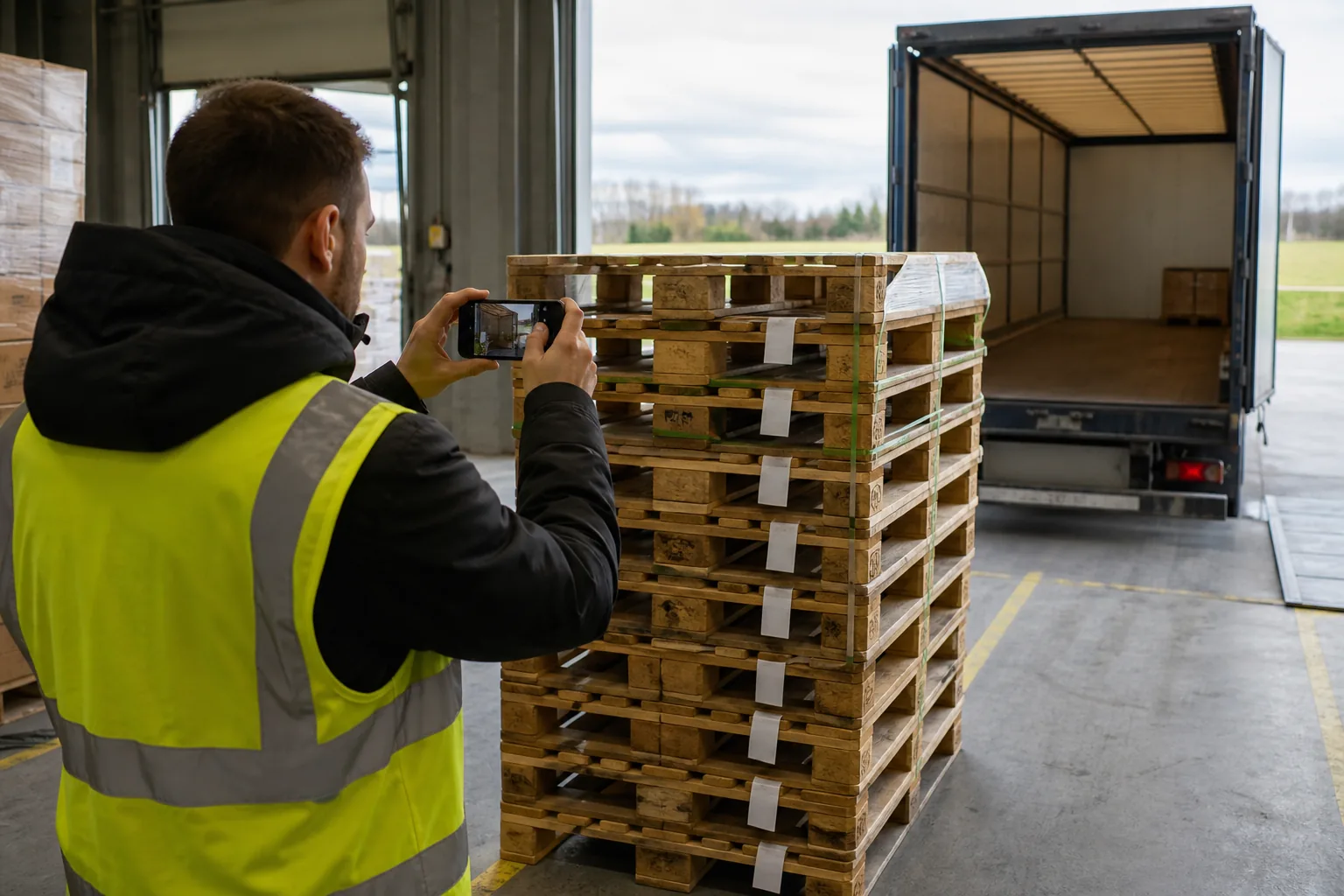
Every logistics manager knows the scenario: a truck delivers goods, the driver wants to return pallets, and chaos erupts at the loading dock. Handwritten notes on the delivery slip, illegible condition descriptions, no photos — and three weeks later you're arguing with the supplier over a credit note that nobody can verify.
Pallet returns are one of the last truly analog processes in logistics. While goods receipts have long been captured via barcode and inventory is tracked in real time, many companies still document the return of Euro pallets on paper or, at best, in an Excel spreadsheet that nobody checks regularly.
The Problem with the Status Quo
The costs of poorly documented pallet returns are invisible at first glance — but add up to significant amounts. Typical problems we hear again and again from logistics managers:
Lost claims. If you don't document damage to returned pallets immediately and verifiably, you lose your claims after the statutory deadlines (7 working days for concealed damage per Article 30 CMR Convention). No photo, no timestamp, no chance.
Pallet shrinkage due to lack of overview. When it's unclear how many pallets came back in what condition, they vanish in the system. At an average pallet value of €10–25 per unit, that quickly adds up to five-figure sums over a year.
Time wasted on media breaks. The handwritten records at the dock have to be typed up again in the office — into SAP, into Excel, into the pallet account. Every media break is a source of errors and costs time.
Disputes with suppliers and carriers. Without clear documentation, claims discussions turn into "he said, she said." That strains business relationships and ties up management capacity.
What a Digital Solution Must Deliver
A meaningful digitization of pallet returns goes beyond a simple app. It must cover the entire process — from capture at the loading dock to post-billing in the office:
Structured data capture. No free text, no forgotten fields. Instead, guided input forms with mandatory fields: supplier, quantity, condition, pallet type.
Photo documentation with timestamps. Every return is documented with photos from defined perspectives. The timestamp proves when the capture took place — critical for claims deadlines.
Automatic damage detection. Modern AI systems can automatically detect and classify damage such as broken boards, missing blocks, or protruding nails in photos. This speeds up assessment and makes it more objective. Read more in our article AI in Pallet Logistics: How Computer Vision Is Changing Damage Assessment.
Export to existing systems. The captured data must flow seamlessly into SAP, Excel, SharePoint, or the company's own TMS — without manual re-entry.
PDF reports as proof. For claims, internal approvals, and communication with suppliers, you need finished reports with all photos and data.
The ROI of Digital Pallet Returns
The investment in a digital solution typically pays for itself within a few months. A sample calculation:
A mid-sized logistics company that processes 50 pallet returns per day saves about 30 minutes per day in administrative effort through structured capture and automatic reports. At an hourly rate of €35, that's roughly €400 per month in personnel costs alone.
On top of that come avoided losses through better claims enforcement. If just 5% of returned pallets are wrongly accepted as "fine" despite being damaged, that creates around €1,125 per month in avoidable losses at 50 pallets per day and an average value of €15.
Why Now Is the Right Time
EPAL has revised and tightened its quality classification and exchange conditions several times in recent years. The requirements for clean documentation are rising. At the same time, the cost of the necessary technology is dropping: a smartphone with a camera is sufficient as hardware, AI-based image analysis is available as a cloud service, and modern apps run without complex IT integration.
Anyone still handling pallet exchanges at the loading dock manually is not only losing money — they're also risking poor results in audits or supplier evaluations.
Conclusion
Digitizing pallet returns is not a major IT project. It's a pragmatic step that pays off quickly and noticeably improves everyday operations at the loading dock. Those who document damage properly, can substantiate claims, and keep track of their pallet account save money and stress.

Ready for digital pallet returns?
Try the app now for free and be among the first to use Pallet Terminal.
No credit card required