
Reducing Pallet Logistics Costs: 7 Levers That Work Immediately
7 concrete levers for logistics professionals to noticeably reduce pallet logistics costs — with calculations and practical tips.
Pallet logistics is a silent cost driver. While companies scrutinise freight rates and warehouse space, thousands of euros seep away every year through Euro pallet losses, inadequate returns and a lack of transparency. Yet costs can be reduced quickly and sustainably with the right levers.
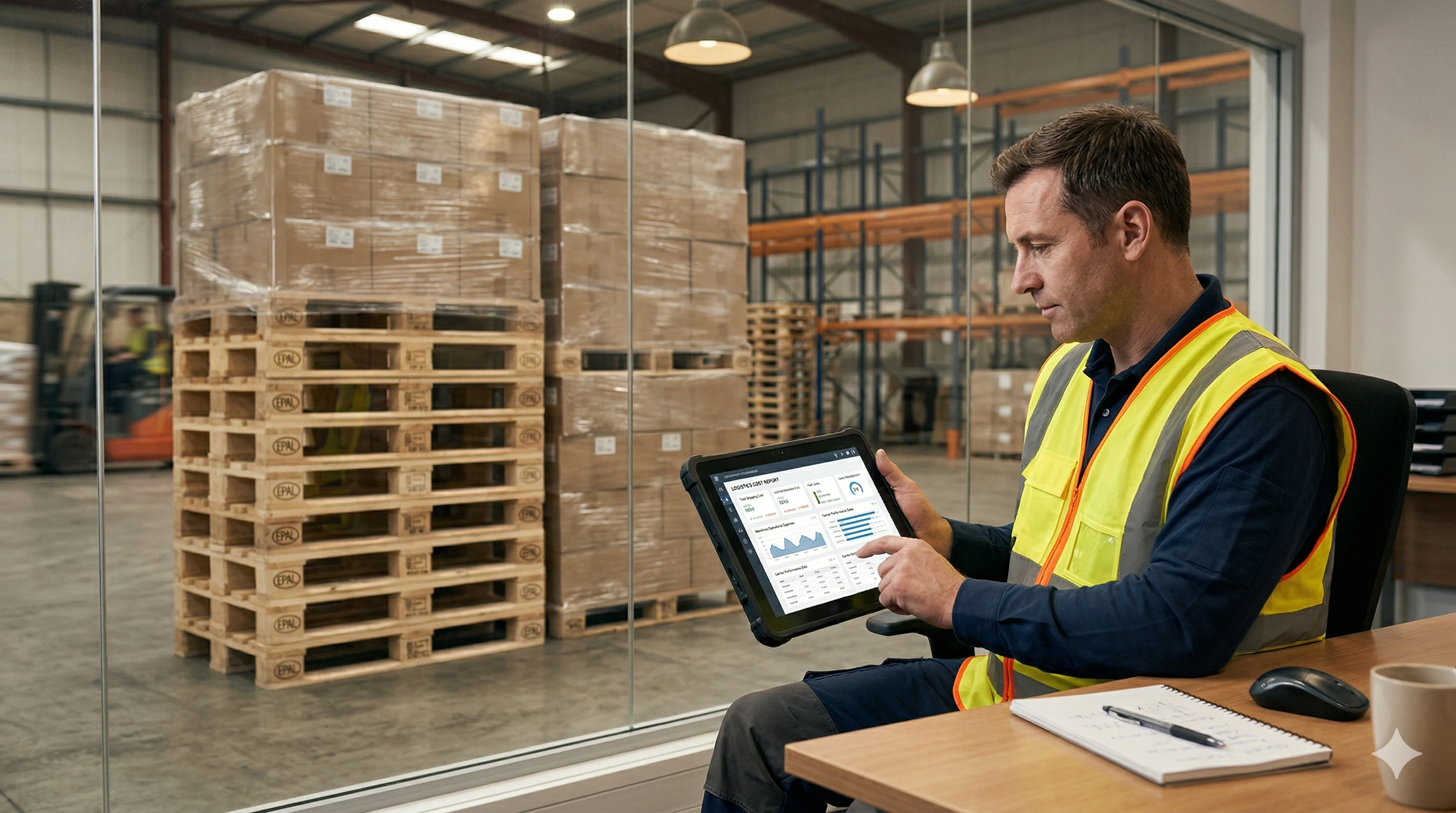
In this article, we present seven levers that deliver immediate results in practice — with concrete calculations.
1. Structured Returns Instead of Chaos
The biggest cost factor in pallet logistics is uncontrolled shrinkage. When there is no clear counting and documentation at the loading dock, pallets simply go missing — literally. A mid-sized company with 500 pallet movements per week and a loss rate of just 3 %, at an average value of €10 per pallet, loses around €780 per month — over €9,000 per year.
A structured return process with clear counting at goods-in and goods-out typically reduces this rate to below 1 %. That alone saves €6,000 annually in the example above. For a step-by-step guide on digitalising your return process, see our article on digitalising pallet returns.
2. Damage Documentation for Better Claim Enforcement
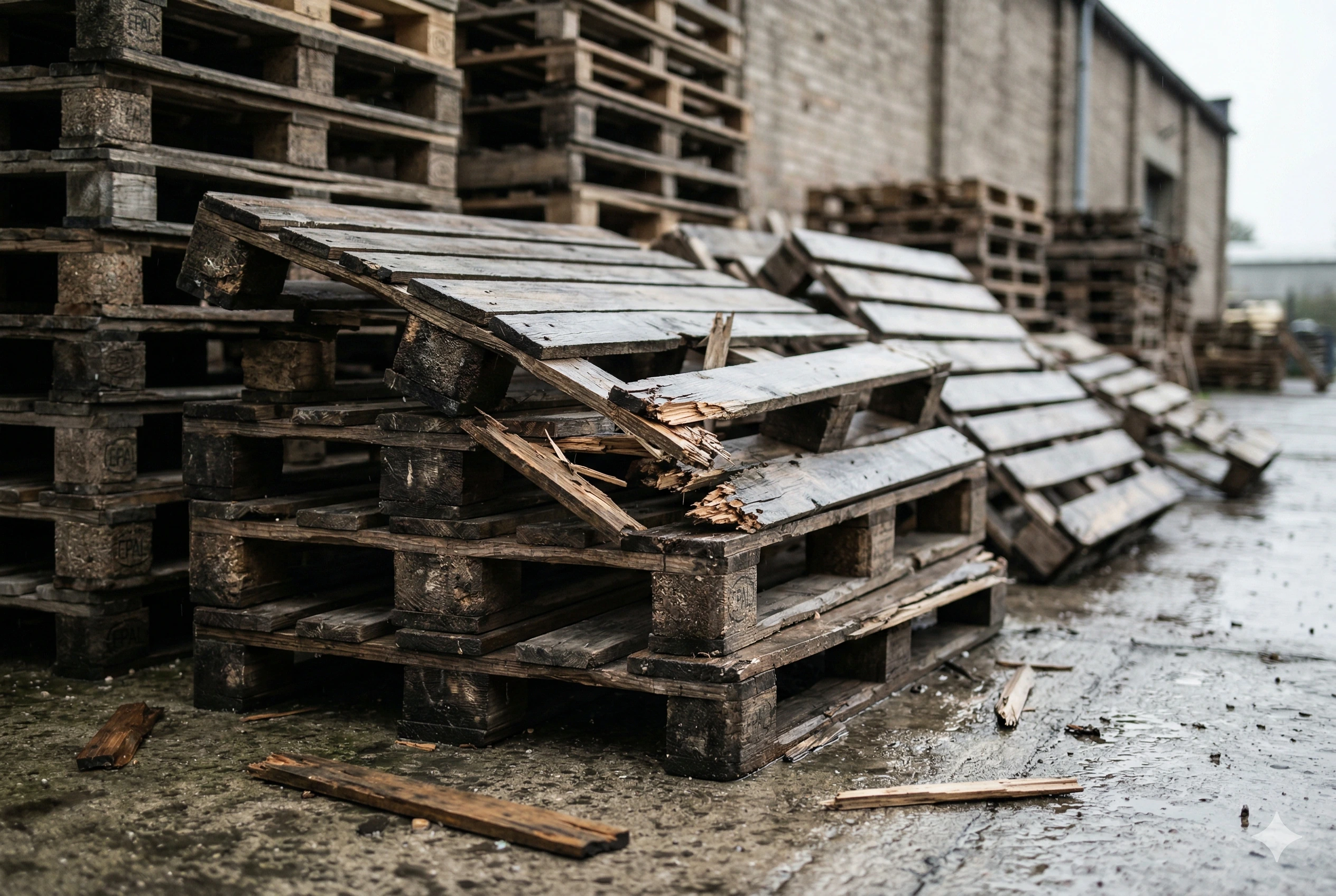
Damaged pallets are frequently accepted without comment because the evidence for a claim is lacking. Yet defective pallets cost twice over: they must be replaced, and the party responsible gets off scot-free.
Anyone who documents damage systematically — with photos, timestamps and supplier attribution — can enforce claims. In practice this means: with 20 damaged pallets per month at €8 replacement cost each, that is €160 per month lost without documentation. Over a year, that is €1,920 that can be recovered through consistent damage documentation.
3. Digital Pallet Accounts Instead of Excel
Excel spreadsheets for pallet accounts are error-prone and time-consuming. Balances do not match, entries are forgotten, and at year-end there is a laborious reconciliation with every supplier. The hidden cost: labour time.
If an employee spends 3 hours per week manually maintaining pallet accounts, at a rate of €35 per hour that is roughly €5,460 per year — for a task that a digital system handles in real time and error-free. On top of this come the costs from incorrect balances, which typically run to several thousand euros per year.
4. AI-Powered Damage Detection
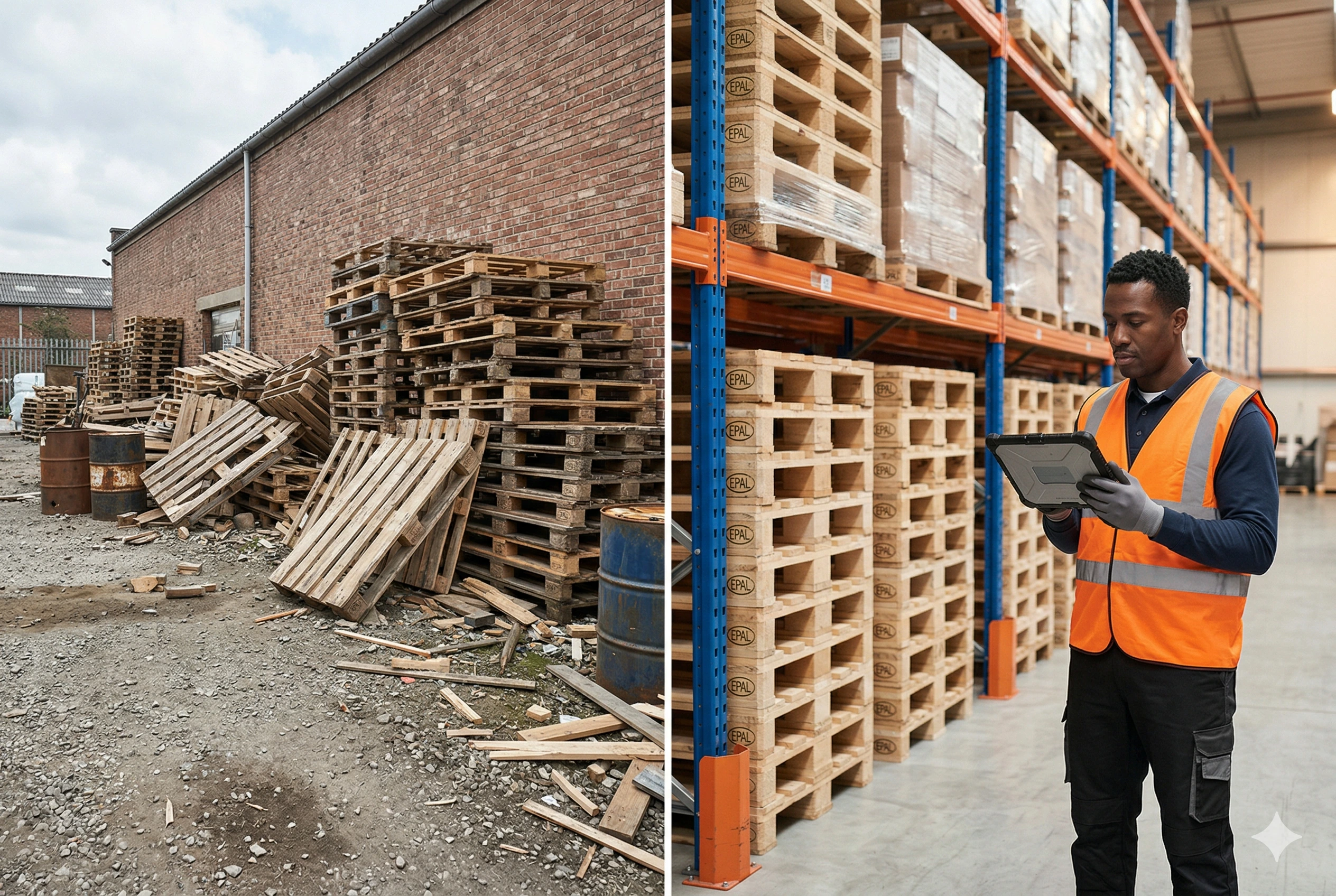
Manual assessment of pallet damage is subjective and inconsistent. What one employee classifies as "still exchange-grade", another would discard. This inconsistency means damaged pallets remain in circulation or intact pallets are unnecessarily removed.
AI-based image analysis creates objectivity. A camera captures the pallet and an algorithm evaluates its condition in seconds — reproducibly and against uniform criteria. Companies using this technology report a reduction in misclassifications of up to 40 %. With a pallet inventory of 5,000 units and a misclassification rate of 5 % (250 pallets at €10 each), this saves up to €1,000 per year through more accurate grading alone.
5. Automated Reports Instead of Manual Follow-Up
Reports on pallet inventories, movements and damage cases are compiled manually in many companies — often only on request and with considerable time investment. The problem: decisions are made on outdated data, and the reporting itself consumes valuable working hours.
Automated reports generated daily or weekly at the push of a button save not only time (an estimated 2–4 hours per week, i.e. €3,600–7,200 per year at €35/hour) but also enable proactive action: anomalies such as rising loss rates or frequent damage from specific suppliers become visible before they turn into real cost problems.
6. Supplier Evaluation Based on Pallet Data
Not all suppliers handle pallets with equal care. Some regularly deliver damaged or substandard pallets, while others consistently provide good quality. Without data, this remains a gut feeling.
Anyone who systematically captures pallet data can evaluate suppliers objectively: what is the damage rate per supplier? How often are the agreed quality classes met? This transparency is a powerful negotiation tool. Companies report that data-driven supplier discussions have enabled them to reduce damage rates by 15–25 % — with a monthly damage volume of €500, that is €75–125 in savings per month.
7. Know and Use Quality Classes
Many companies do not differentiate between the Euro pallet quality classes New, A, B and C. This leads to high-quality pallets being used in applications where a cheaper class would suffice — or conversely, substandard pallets ending up where they cause damage.
Knowing and deliberately deploying the classes saves money on both sides. A new Euro pallet costs around €12–14, while a Class B pallet costs only €5–7. A company using 100 pallets per month for internal warehousing that switches from new pallets to Class B saves €600–800 per month. For a comprehensive overview of quality classes, see our article on Euro pallet quality classes.
Conclusion: Small Levers, Big Impact
Pallet logistics costs cannot be halved in a single step. But the combination of all seven levers — structured returns, damage documentation, digital pallet accounts, AI damage detection, automated reports, data-driven supplier evaluation and targeted use of quality classes — adds up to a savings potential of €20,000 or more per year, depending on company size and pallet volume.
The most important first step: create transparency. If you do not know your pallet movements, losses and damage, you cannot optimise anything. Digital tools make this entry point easier today than ever before.

Ready for digital pallet returns?
Try the app now for free and be among the first to use Pallet Terminal.
No credit card required