
Managing Pallet Accounts: How to Keep Track of Your Load Carriers
Why pallet accounts never balance in practice, common pitfalls, and how digital capture brings order.
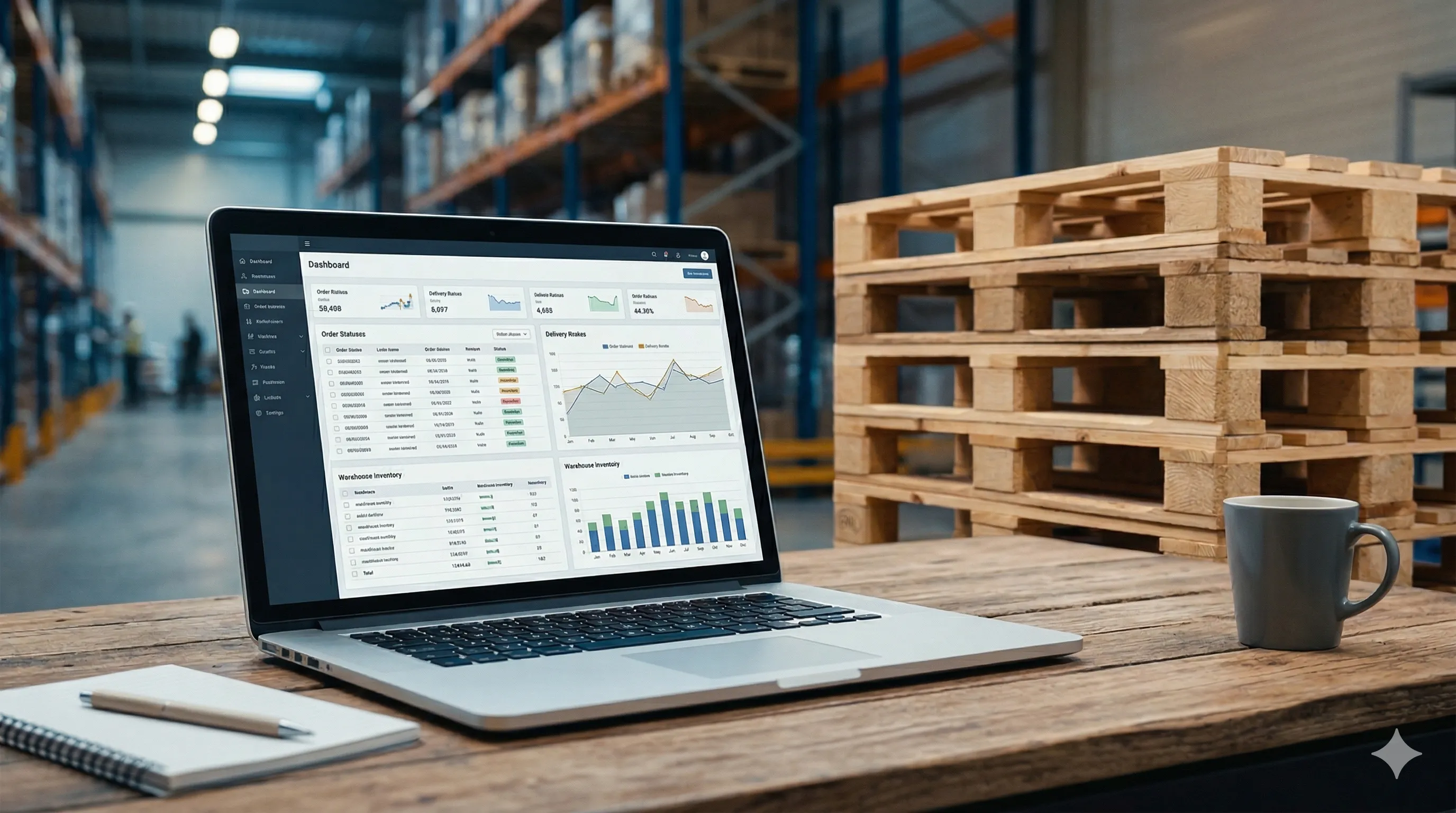
Anyone who regularly ships or receives goods on euro pallets cannot avoid maintaining a pallet account. It documents which business partner owes how many pallets or receives a credit — essentially bookkeeping for load carriers. Yet many companies maintain their pallet accounts only half-heartedly or not at all. The result: thousands of euros in losses per year, endless disputes with partners, and a permanent feeling of having lost track.
What Is a Pallet Account and Why Do You Need One?
A pallet account works like a current account — except instead of euros, pallets are booked. With every delivery, every exchange, and every return, the balance is adjusted. If you deliver 20 euro pallets to a customer and receive only 15 back, a credit of 5 pallets appears on your account.
This sounds simple but quickly becomes complex: a medium-sized company with 50 active suppliers and customers easily handles several hundred pallet movements per month. Without systematic account management, you lose track within a few weeks.
The pallet account is also the foundation for any financial valuation. At a current market value of 10–25 € per euro pallet, even small discrepancies quickly add up to five-figure amounts.
Why Pallet Accounts Never Balance in Practice
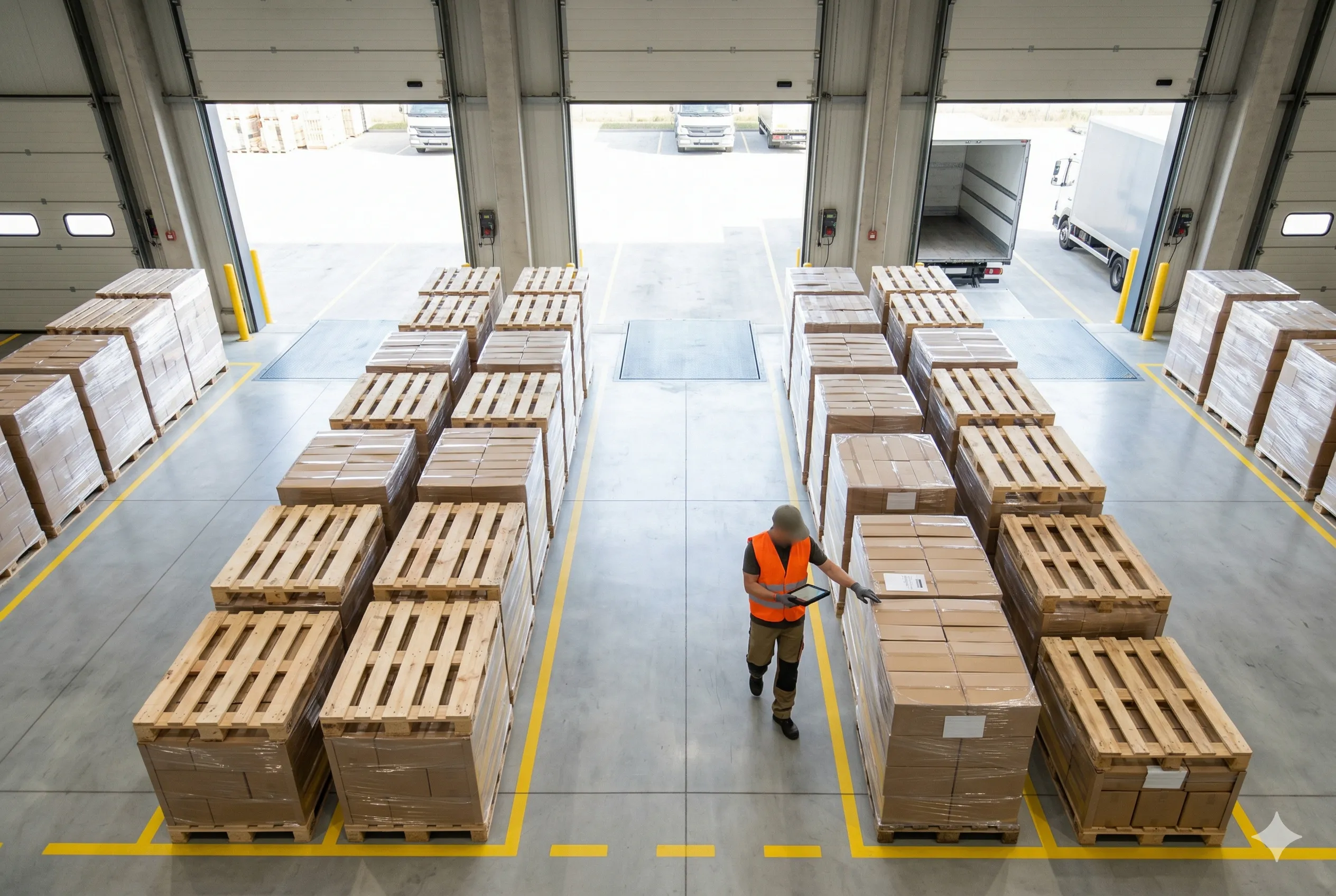
Ask ten logistics managers whether their pallet accounts are accurate, and you'll get the same answer ten times: No. The reasons are manifold, but they can be grouped into three main categories.
Shrinkage and theft: Pallets disappear — on the premises, during transport, or at intermediate storage. Euro pallets are a popular target due to their resale value. This shrinkage doesn't appear on any pallet voucher and silently eats into your inventory.
Counting errors at the dock: At a busy loading dock, pallets are counted under time pressure. Drivers push for departure, employees change shifts. A transposed digit on the delivery note — 18 instead of 13 — and the discrepancy silently migrates into your account. Over weeks and months, such errors accumulate significantly.
Missing or delayed documentation: When pallet movements are only recorded days after the actual handover, details are lost. What quality were the pallets? Were damages documented? Was the pallet exchange carried out correctly? Without timely documentation, these questions can no longer be resolved after the fact.
Common Mistakes in Pallet Account Management
Beyond the systemic causes, there are a number of mistakes companies make in account management itself.
No consistent process: In many operations, each location records pallet movements differently. One warehouse uses Excel, another a paper notepad, the third nothing at all. Without a standardised process, a consolidated overview is impossible.
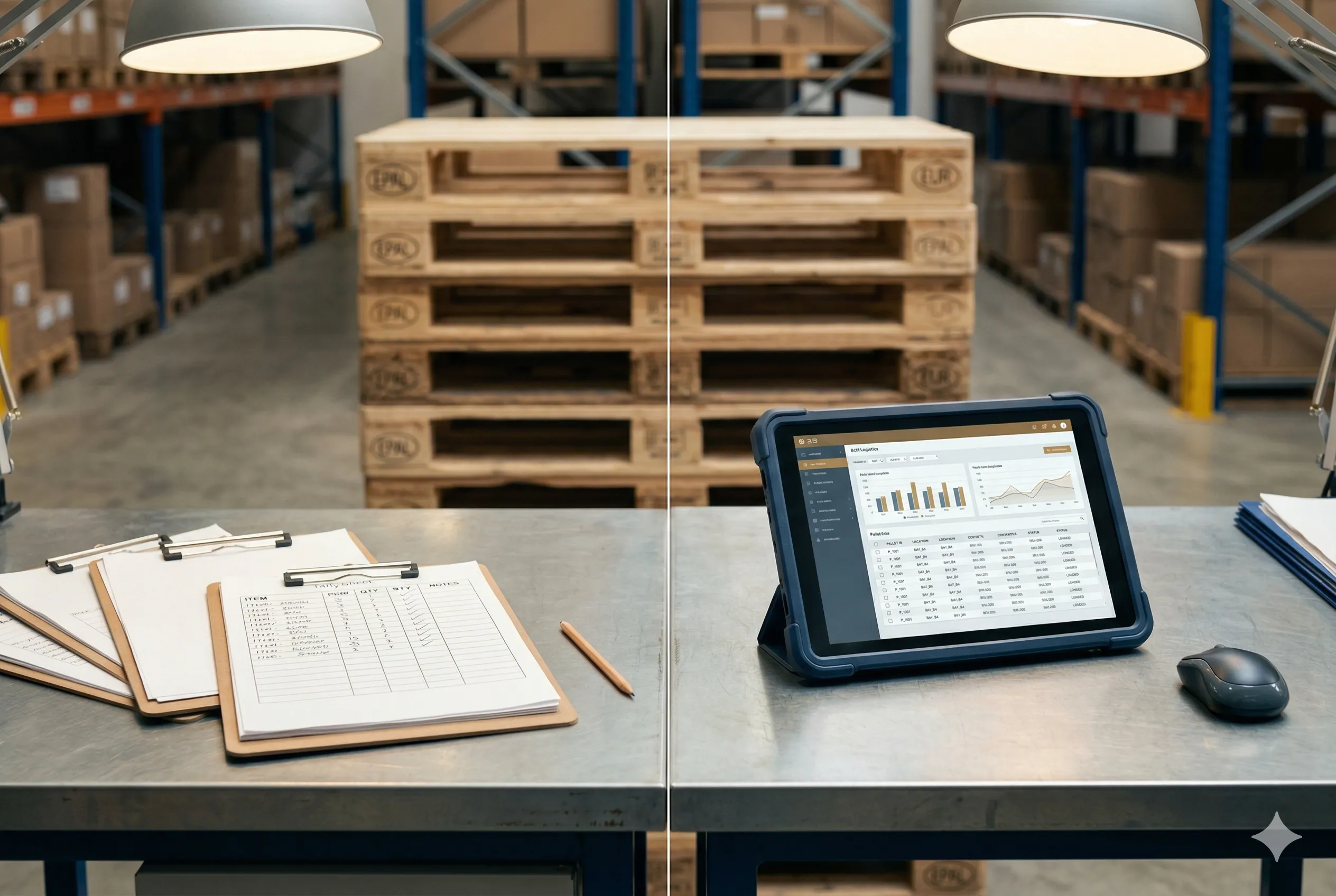
Paper-based tracking: Pallet vouchers, handwritten notes, and delivery note copies are error-prone, difficult to archive, and even harder to analyse. A single illegible pallet voucher can cause a discrepancy worth hundreds of euros.
Irregular reconciliation: Many companies reconcile their pallet accounts only once per quarter or even annually. The longer the period, the harder it becomes to resolve discrepancies — memories fade, receipts disappear, employees change.
No quality differentiation: A pallet account that only records quantities does not reflect reality. Anyone who issues 20 Class A pallets and receives 20 Class C pallets in return has a balanced ledger on paper but a real loss in value.
How Digital Tools Bring Order
The digitalisation of pallet returns is the most effective lever for getting pallet accounts under control. Digital capture solutions offer decisive advantages over manual processes.
Real-time recording: Every pallet movement is captured directly at the dock via app or scanner — with timestamp, quantity, and photo documentation. This eliminates the time lag between handover and booking.
Automatic account reconciliation: When both business partners use the same system, discrepancies become visible immediately. There are no more weeks-long discussions about who handed over how many pallets and when.
Quality documentation: Digital systems capture not only quantities but also the condition of the pallets. Photos of damage are automatically linked to the respective transaction and are available as evidence in case of disputes.
Analytics and trends: A digital pallet account shows you at the press of a button which partners generate the largest discrepancies, where shrinkage occurs, and how your total inventory is developing.
Best Practices for Pallet Account Management
Regardless of whether you already work digitally or are still in transition — these principles make the difference.
Daily recording, monthly reconciliation: Every pallet movement is recorded on the day of handover. At least once a month, you reconcile the balance with your most important partners. For high-volume partners, a weekly cadence is recommended.
Clear responsibilities: Define who is responsible for pallet account management at each location. Without clear accountability, account maintenance falls to no one — and therefore falls through the cracks.
Standardised processes at every dock: Every employee must know how pallets are counted, inspected, and documented. Training and simple checklists significantly reduce the error rate.
Track quality alongside quantity: Record not only the number but also the quality class of pallets. This makes your account meaningful and protects you from hidden value losses.
Resolve discrepancies immediately: Every deviation that surfaces during reconciliation is investigated and documented straight away. The longer you wait, the more difficult and expensive the resolution becomes.
Conclusion
A well-maintained pallet account is not a luxury — it is the foundation of cost-effective pallet logistics. Most discrepancies arise not from malicious intent but from missing processes, delayed documentation, and irregular reconciliation. Anyone who eliminates these three weak points — ideally with digital support — not only regains oversight but saves real money.

Ready for digital pallet returns?
Try the app now for free and be among the first to use Pallet Terminal.
No credit card required